
When Love Takes the Stage: The Power of Collective Belonging

In a season centered on romantic love, it's worth remembering that love is more than a feeling between two people.
Again and again, love has stepped onto public stages and become a force that binds strangers, reshapes identity, and moves entire cultures.
A recent halftime performance reminded millions of this truth. Not through policy statements or debate, but through identity, culture, and shared memory. It carried belonging and resistance in a way few speeches ever could.
And for many watching, something in the body responded.
That response is not accidental. It is psychological.
The Human Need to Belong
At our core, we are wired for belonging. Not surface-level inclusion, but recognition.
Research on identity and mental health consistently shows that suppression of core identity (whether cultural, racial, linguistic, or ideological) creates psychological strain. It increases vigilance. It activates the nervous system's threat response. It subtly communicates: It's not safe to fully be you.
This is not just theoretical. Many women I work with know this intimately. In high-pressure professional environments, there's often subtle pressure to assimilate. To soften an accent. To downplay cultural references. To code-switch seamlessly. To become more "palatable."
For high-achieving BIPOC and first-gen women especially, this pressure can be relentless. You learn early that success often requires translation. That being "professional" sometimes means being less yourself.
Over time, this creates a quiet split: the public self that performs, and the private, authentic self that waits.
That split is exhausting. And it shows up in ways you might not immediately connect:
The inability to relax without guilt or restlessness.
The burnout that persists even after vacation.
The perfectionism that never feels like enough.
The impostor syndrome that whispers, “you don't really belong here.”
These aren't just personality traits. They're often survival strategies formed in response to environments where your full identity wasn't safe.
But when we see ourselves represented, fully and unapologetically, something shifts. Muscles soften. Breathing deepens. Creativity expands. Our nervous system can finally exhale, because it no longer has to divide itself.
Belonging is regulatory.
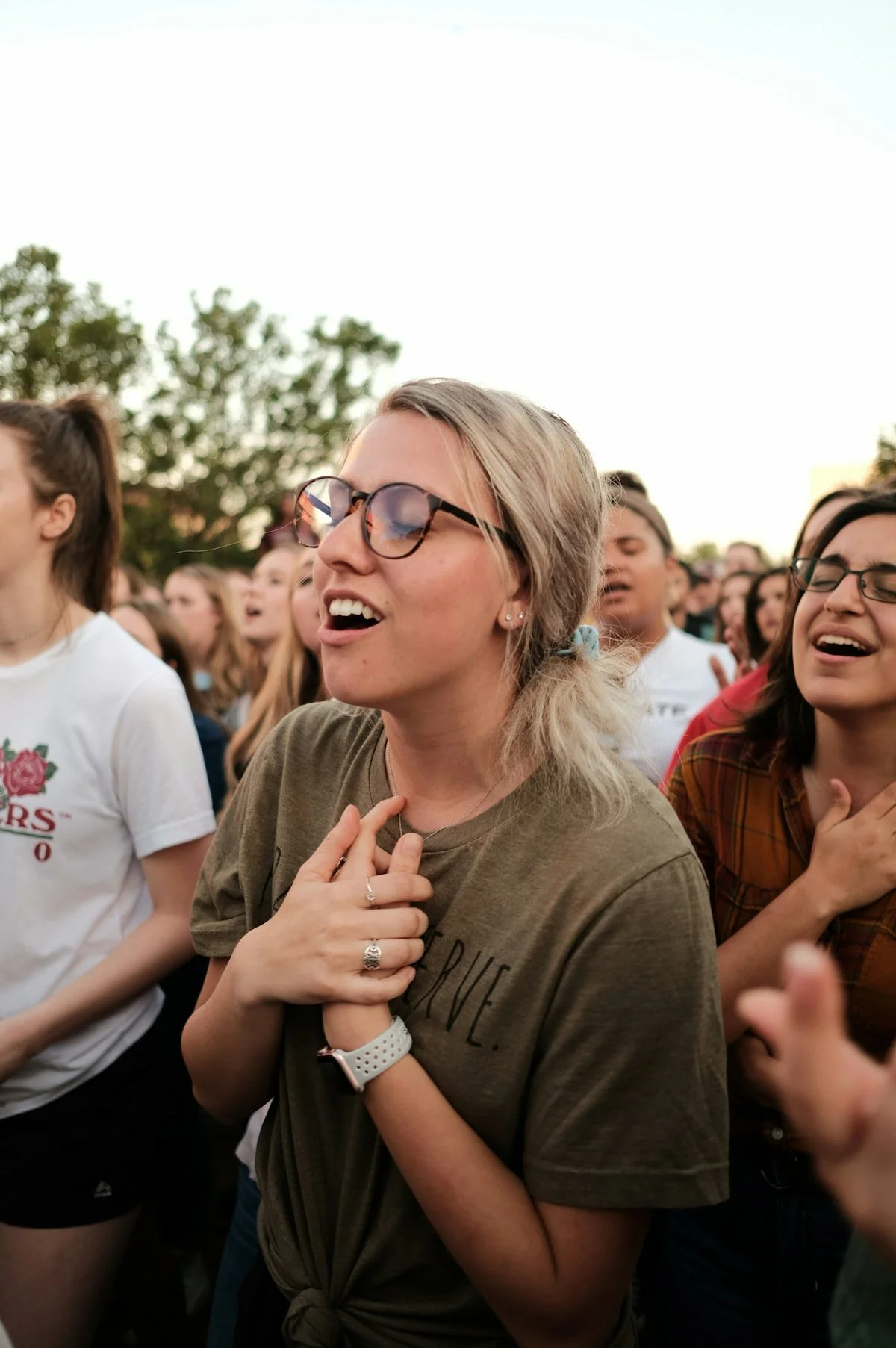
Photo by Cason Asher | Unsplash
Why Performances Feel So Powerful
Psychologists use the term collective effervescence to describe what happens when people experience intense emotion together. It happens at concerts, ceremonies, demonstrations, even religious services.
Individual awareness softens and instead, people experience a sense of unison. The "I" shifts into "we." The energy in the room feels synchronized.
Music and rhythm amplify this effect. They synchronize our breathing, heart rate, and movement. Rhythm creates predictability, while movement activates mirror neurons, allowing us to unconsciously mimic and connect with those around us.
Long before we understood words, we understood rhythm. Rocked in the womb by a heartbeat, soothed by repetition and sway. When we sing or move together, our nervous systems co-regulate. We feel safer. Less alone.
And when people feel safe and connected, they are more willing to act.
This is why live performance can feel almost transcendent. It's not just aesthetic pleasure. It's embodied connection.
Why Art Moves Us Differently Than Argument
Art activates something distinct from persuasion.
Contemporary research on aesthetic experience suggests that encounters with art can be transformative. Not just pleasant, but worldview-shifting. Instead of being told what to think, we're invited into meaning-making.
Art doesn't just persuade. It reaches the human beneath the position. Instead of saying, "You're wrong," it says, "This is who you are."
This is why artists often shape history not by offering solutions, but by shaping identity.
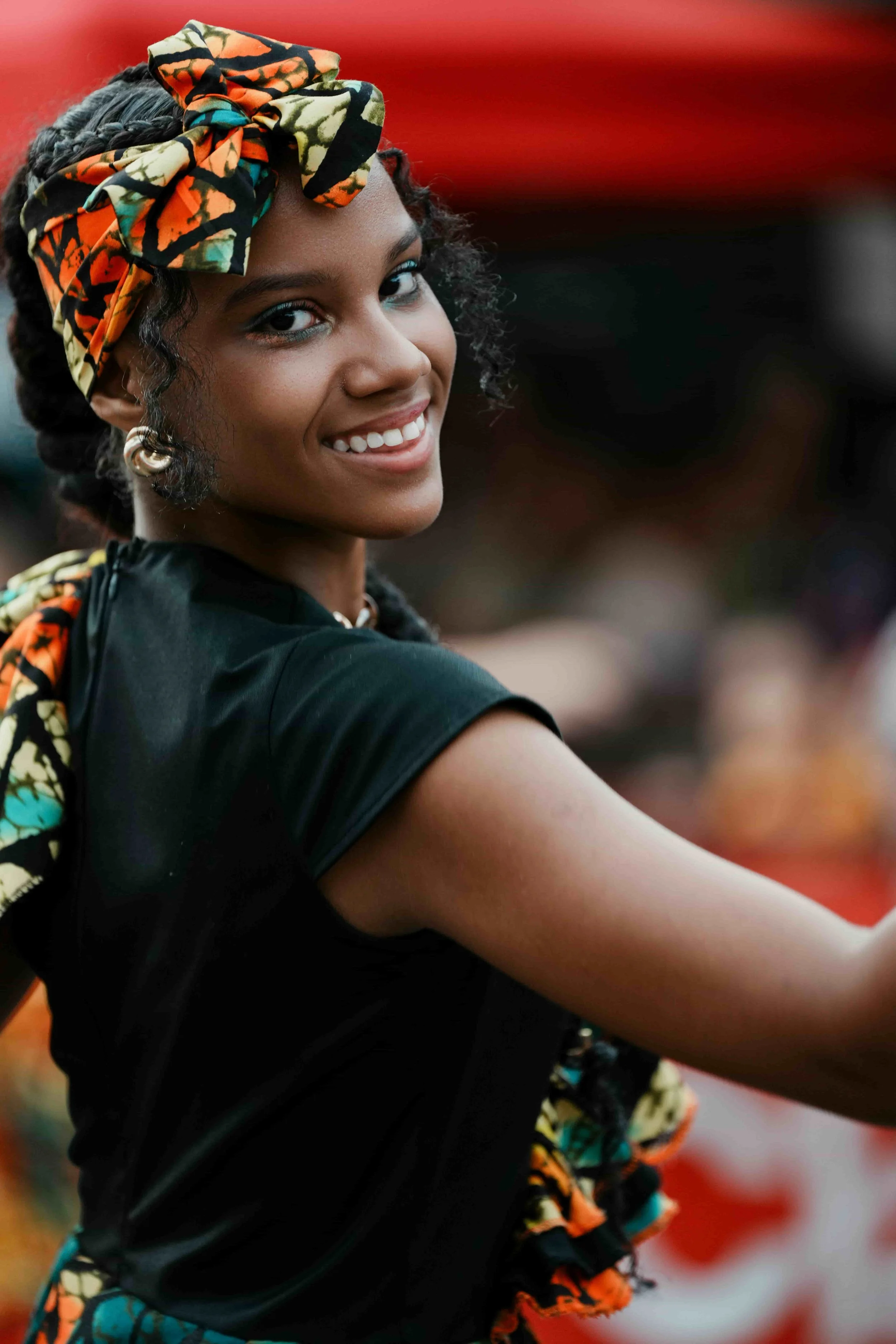
Photo by Mario Spencer | Pexels
Love as the Sustaining Force
Anger mobilizes quickly. It activates the threat system. It sharpens focus.
But love sustains.
Love activates attachment systems. It fosters care, protection, and loyalty. It expands the circle of "us." And when that circle expands, people are willing to endure discomfort, risk reputation, or persist over time.
Collective belonging rooted in love creates psychological safety. It allows people to show up fully without fragmenting themselves. And when we don't have to spend energy hiding, assimilating, or bracing, that energy becomes available for contribution, excellence, and leadership.
Many social movements begin with outrage. They endure because of love.
Finding Your Stage
Not everyone stands under stadium lights. But everyone needs a stage.
A place where your full identity is not trimmed for approval. Where you don't have to translate yourself or manage how you're perceived. Where your nervous system can finally rest.
For many high-achieving women, especially those from marginalized or first-gen backgrounds, those spaces can feel rare. You've learned to be excellent at performing capability. At staying composed. At making others comfortable.
But where do you get to just... be?
The question is not whether collective belonging matters. It does…biologically, psychologically, socially.
The real questions are more personal:
Where do you allow yourself to be seen?
Where does your nervous system relax instead of brace?
Where are you not performing assimilation, but expressing authenticity?
Sometimes that space is with family. Sometimes it's with a small circle of friends who share your background. Sometimes it's in community gatherings, cultural events, or creative pursuits.
And sometimes, it's in therapy.
Not all therapy creates that space. But therapy that honors your full identity (your cultural background, your lived experience, the weight of being "the first" or "the only”) can become one of those rare places where fragmentation isn't required.
At Graceful Mind Therapy, I work with accomplished women who have spent years navigating the pressure to assimilate, perform, and prove themselves. Women who are tired of the internal split between who they are and who they feel they have to be.
If you're curious about what culturally responsive, depth-oriented therapy might look like for you, you can learn more about me on the about Maria page, or explore therapy for women on my site.
In February, when love is marketed as roses and candlelight, it may be worth remembering this broader truth:
Love has always been public. It has always been embodied. It has always been stronger when shared.
Sometimes, it simply needs a stage.
by Maria Perdomo-Torres, LCSW-S, MHA, CFSW

Maria Perdomo-Torres, LCSW-S, MHA, CFSW, is a bilingual psychotherapist and founder of Graceful Mind Therapy, a specialized private practice for accomplished women navigating anxiety, burnout, and the internal weight of high expectations. Her writing explores mental health, identity, emotional patterns, and the inner lives of women moving through complexity, responsibility, and growth.
